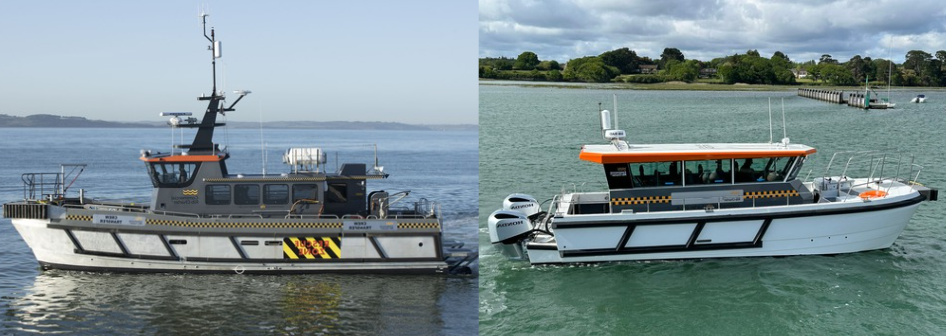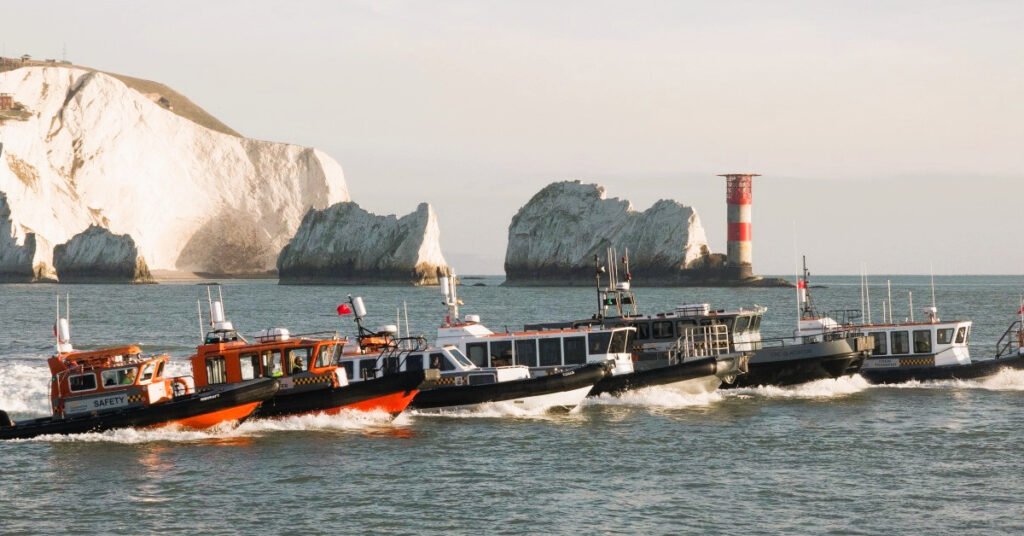


Operating an amphibious vessel is unlike any other role on the water. It demands constant awareness, technical knowledge, and the ability to make confident decisions across two very different environments.
To give a genuine insight into what this involves, we spoke with Sam Goldfinch, skipper of CRC Walrus, one of our specialist amphibious vessels, about what a typical working day really looks like.
Setting the scene
“Challenging” is the word Sam uses first when describing his role – and for good reason. Amphibious operations often take place on shifting sandbanks in tidal environments that are constantly changing beneath the vessel.
Compared to smaller amphibious Rib’s, CRC Walrus presents additional challenges due to her size and weight. Every movement, whether on land or afloat, needs to be carefully planned and executed.
Sam has been skippering CRC Walrus for the past three years. Before that, he worked for CRC as a freelance skipper across 15m, 17m and 20m vessels on projects throughout the UK and Europe, bringing a wealth of offshore and commercial experience into amphibious operations.
Preparation comes first
A working day begins long before engines are started.
Before departing base, Sam assesses detailed weather forecasts and sea states and reviews the work scope for the day. In amphibious operations, preparation is critical – most of the decisions that matter are made early.
Checks on an amphibious vessel are far more involved than on a standard Rib. CRC Walrus has hundreds of hydraulic fittings, multiple moving components, and extensive greasing points to maintain. These systems are essential to the amphibious capability, and every check matters.
“About 90% of my decision-making happens before I even start the engines,” Sam explains. “On the transit from base to the wind farm, I’m already planning where I’ll transition from water to land based on conditions and which turbine we’re working on.”
From land to water: The launch sequence
Launching an amphibious vessel is a carefully controlled process.
Sam begins by starting the hydraulic power unit (HPU), releasing the brake, and engaging forward movement via the joystick. Once CRC Walrus enters the water but remains on her wheels, the engines are trimmed down and brought into gear.
Only once the vessel is fully floating does Sam lift the wheels into their pockets, shut down the HPU, and continue under conventional propulsion.
The main risk during this phase is swell interacting with the sandbank. Poor timing can result in the vessel lifting and slamming down onto the wheels, potentially causing damage. For that reason, all movements are slow, deliberate, and constantly reassessed.
Working offshore: Constant awareness
Once underway, a typical job involves transiting from base out to the wind farm, pushing onto turbines to allow engineers access, and remaining on standby while work is completed.
While passengers may experience a smooth, routine transit, Sam is continuously monitoring vessel safety, crew welfare, surrounding traffic, and water depth.
Clear communication with engineers, other vessels, and shore teams is essential. As Sam puts it:
“If you ain’t a friend of safety, you ain’t a friend of mine.”
That mindset underpins every operation.
Returning ashore: Water to land
Recovery is not inherently more complex than launching, but it carries its own challenges.
Visibility is reduced when driving onto sand, and Sam must rely on experience and judgement to avoid unseen hazards beneath the surface.
The principles remain the same: slow, controlled movements and constant situational awareness.
Adapting to changing conditions
No two days are identical, and even the best-planned operation can change rapidly.
Sam recalls a job where engineers were dropped off while CRC Walrus was fully supported on her wheels, with no surrounding water. Several hours later, the tide had returned with a swell – not enough to float the vessel fully, but enough to complicate recovery.
In that moment, Sam had to operate the wheels and engines simultaneously to safely retrieve the engineers -a manoeuvre that requires experience, calm decision-making, and absolute confidence in the vessel’s systems.
Knowing when to come down from a structure as conditions deteriorate is often the most important judgement call of the day.
Responsibility and safety
Operating between land and water doesn’t change the importance of risk management, but it does change how risks present themselves.
On sandbanks, falls are from a greater height and landings are far less forgiving than water. Sam is acutely aware that, as skipper, responsibility for everyone on board rests with him from embarkation to disembarkation.
Clear safety briefings during transit help ensure that crew and passengers understand what to expect and feel confident in the operation.
End of the day
Once back ashore, the work isn’t over.
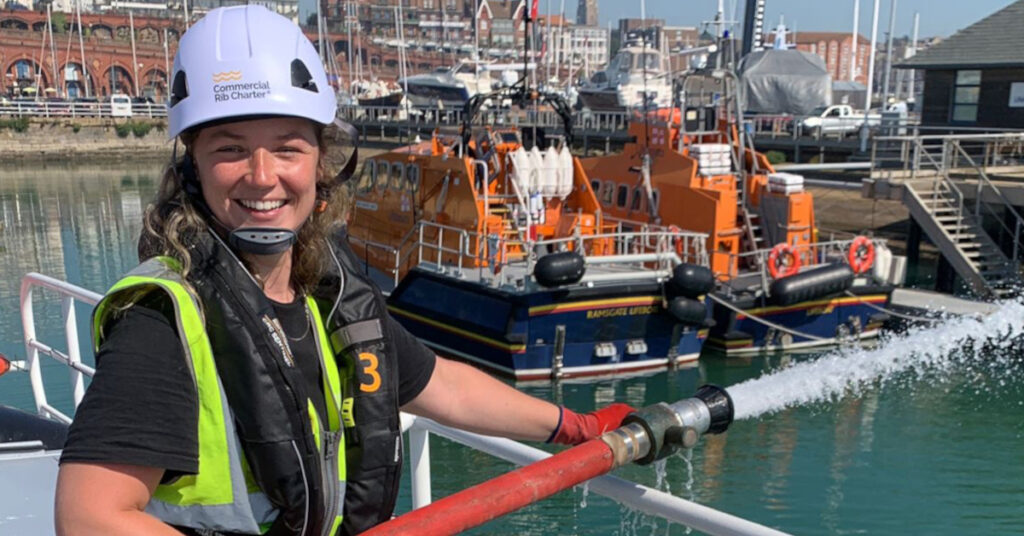
Passengers disembark, followed by a full washdown, refuelling, completion of daily logs, and vessel shutdown.
The day finishes with a debrief between skipper and crew, identifying anything that could be improved for future operations.
And the most satisfying part of a successful day?
“Getting off the boat,” Sam laughs – a reminder that even the most rewarding work is still hard-earned.