

The UK’s wind industry hit the headlines last month for giving us our ‘greenest’ Easter bank holiday on record, with wind and solar energy providing 60% of our electricity needs on what was an exceptional sunny and windy weekend. On average in 2020, wind energy alone accounted for nearly a third of our total electricity supply – a figure which is only set to rise over the coming decade.
The UK has one of the biggest offshore wind industries in Europe and is the home to four of the five biggest wind farms in the world – the largest being the Walney Extension in the Irish Sea with a capacity of 659 MW. Some of the UK’s largest farms are even undergoing extensions with Hornsea, Dogger Bank, East Anglia 1 and Rampion all undergoing further construction or planning consent.
Technology is advancing at a rapid rate too, with floating wind turbines being trialled off the Scottish coast, increasing development opportunities around the world where water depth is simply too deep for traditional monopile turbines to be installed.
The Crew Transfer vessel (CTV) market is evolving at a similar rapid pace too with a range of prototype vessels being launched or under construction too – such as hydrogen or battery hybrid-powered catamarans and ‘surface-effect’ vessels which have a hull design which drastically reduces drag.
…and for those who wonder why we can’t just run electric-powered vessels and charge them directly from the wind turbines out on the wind farm… it’s being looked at!
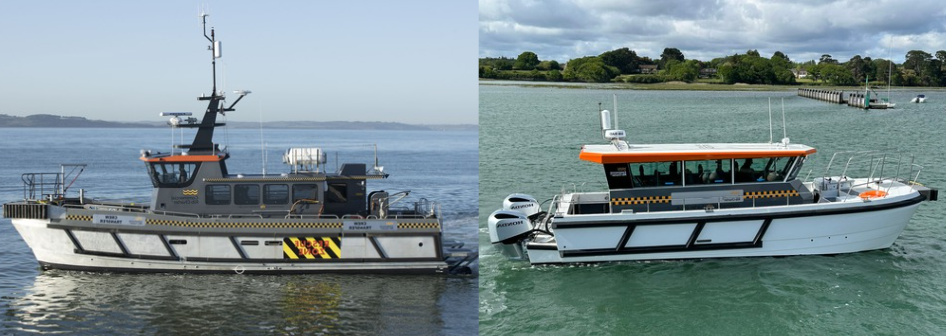
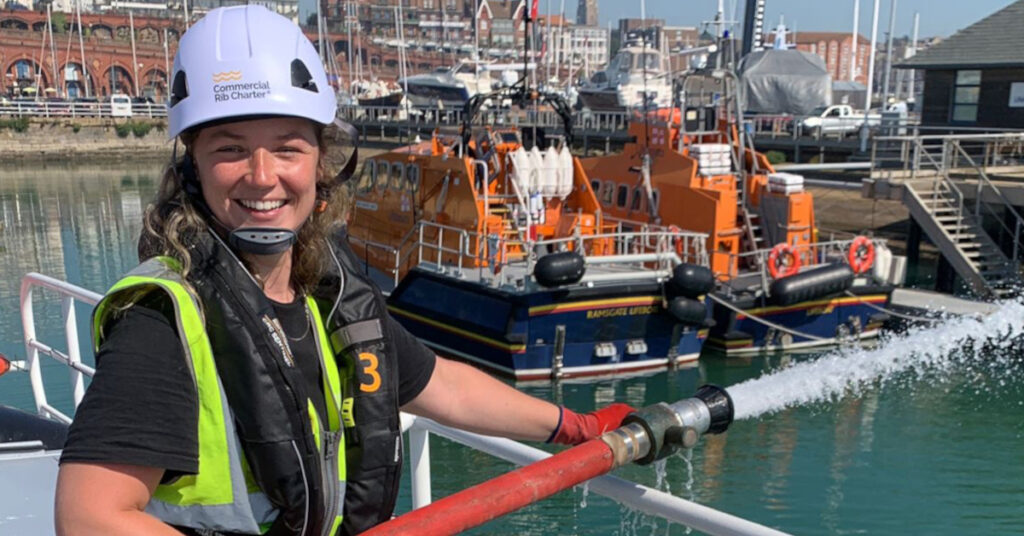
Commercial Rib Charter have a wide range of vessels to cater for the whole industry – from safety and survey boats for initial scoping, guard and dive support vessels for construction and cable pulls, and CTVs for daily maintenance once operational. View Our Fleet for more information.