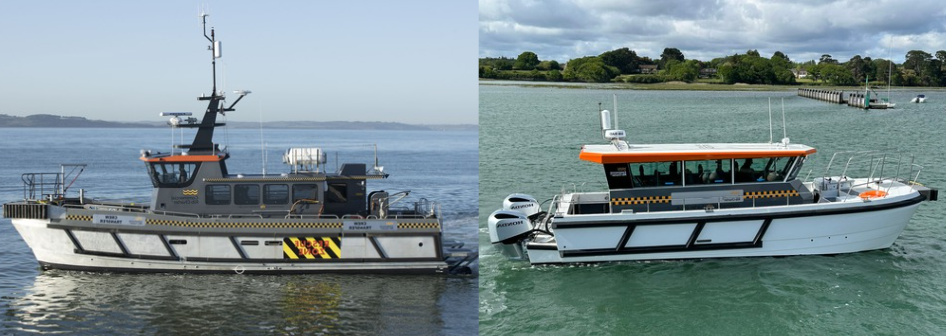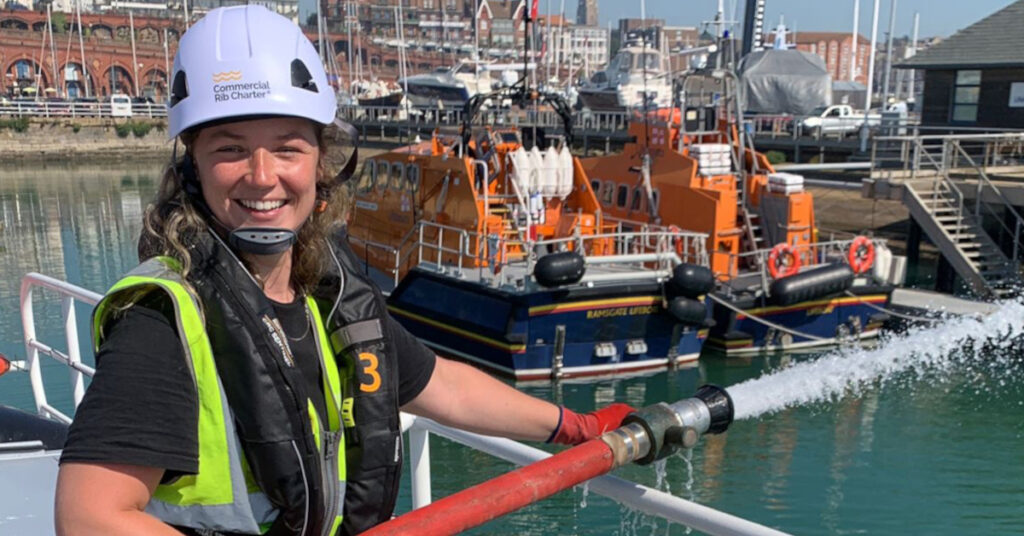


It will come as no surprise that drills and training are a cornerstone of the professional and competent operation of commercial vessels. All of our masters and crew are qualified and commercially endorsed to work on passenger carrying workboats, but regular exercises still need to be carried out to keep skills honed and to check equipment is working correctly.
The main objective with drills is to ensure all crew can react quickly and effectively if an emergency arises. At sea, a matter of seconds can be the difference between a crisis averted or serious injury or incident occurring.
It is also a strict regulatory requirement, as dictated by the Maritime and Coastguard Agency’s Workboat Code – “on board training including practice fire and abandon ship drills shall be regularly, routinely carried out by the crew”. The code goes on to list other drills, including man overboard exercises and deploying the life raft, which is mandatory for ALL crew, regardless of rank or experience.
Here at CRC we tailor our drills to suit the type of vessels and equipment on board:

- Man overboard drill – using a Jason’s cradle or SB sling to recover a floating dummy from the water.
- Fire drill – deploying and testing fire pumps and hoses. Also includes locating and inspecting fire extinguishers on our smaller vessels.
- Abandon ship – inspecting and preparing life rafts for deployment. Also includes locating grab bags which contain flares, VHF radios and thermal blankets.
- Machinery breakdowns – practicing operating the vessel which has lost an engine or jet unit. Some vessels have back-up control levers and systems so the vessel can limp to port, but these needs practicing beforehand.
- Flooding – using a salvage pump to evacuate a flooded engine room or void. On our larger vessels these are independent pumps which can be moved around the vessel.

We also require additional ‘scenario discussions’ to be carried out between our crew on a regular basis to discuss how to react during certain situations such as grounding, restricted visibility, machinery breakdown or a Mayday call from a nearby vessel. These talks ensure the crew are working in harmony and each know their specific roles and responsibilities.
We take drills very seriously and require all our masters and crew to carry out a set number of drills each month, followed up with written findings and photographic evidence. Our Project Managers will attend many of these drills and relay drill reports back to our clients on a monthly basis. Carrying out drills is also a good opportunity to test the function of life saving equipment such as quick release mechanisms, pumps and alarms. Some equipment such as flares also have expiry dates which need checking regularly and replaced in time to meet our code requirements.
With a fleet of over 40 vessels coded to MCA Category 2 and 3, we have been operating Cabin Ribs, Catamarans and Open Ribs for over 20 years and have further accreditations with IMCA, the Port of London Authority, Achilles and the Police boat code. Read more about certification and compliance here.