

In recent years all vessel operators will have noticed a large shift in conversation about vessel propulsion systems and fuel types, largely due to new government net zero targets and wind farm operators looking to drastically reduce their carbon footprint. RWE for instance are aiming to be carbon neutral by 2040 whilst Orsted have gone further and are aiming for 2025 – one of the most ambitious targets in the renewables sector.
To achieve this, crew transfer vessels are being encouraged to change. Currently, tens of thousands of litres of diesel are burned on CTVs every month to support the logistics needed to build, maintain and operate offshore wind farms. With new developments heading ever further offshore, fuel consumption will only increase.
In an attempt to reduce carbon emissions, numerous solutions are being explored across the industry, including ‘hydrotreated vegetable oil’. This is fuel derived from animal fats, plant remains and cooking oils. Although it is similar to biodiesel, the production method is different as it uses hydrogen as a catalyst rather than methanol. The end result is a fuel which has 90% lower CO2 emissions than regular marine diesel, as well as fewer nitrogen and sulfur oxides.
The other large benefit of HVO fuels is that it is deemed a ‘drop-in fuel’ which means it can be used straight away in many diesel engines without any modifications. On a small number of engines the fuel pumps may need to be changed but on the whole, HVO can be purchased from fuel suppliers across the UK, delivered by tanker and used immediately.

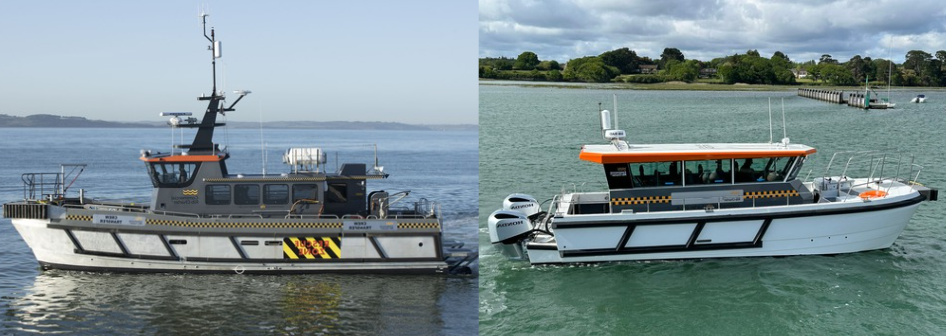
We’re excited to partner with RWE in being one of the first operators of diesel outboards for the offshore renewables sector in the UK, Our new amphibious vessel, CRC Walrus, due to be delivered this autumn, will be fitted with HVO compatible diesel OXE outboard engines.
Read more about our shallow draft wind farm support vessels and amphibious vessels here.