

Nitrox diving is a specialist type of diving which uses a different gas mix for the divers to breathe. Often found in recreational scuba diving, nitrox diving is now more prominent on dive support workboats and offshore energy projects. Our flagship dive vessel, CRC Sentinel, is even fitted out with a state-of-the-art 2 diver nitrox panel!
In typical surface supply diving, breathing or ‘atmospheric’ air is compressed into cylinders for the divers. This air is actually made up mostly of nitrogen (79%) with a relatively small amount of oxygen (21%). Nitrox, or ‘enriched air nitrox’ as it is also known, reduces the nitrogen amount and increases the oxygen portion to over 30% and even 36% in some cases.
There are several benefits to this:
- Divers can spend more time underwater
- Divers can dive more frequently
- Gas storage is more efficient and cylinders don’t deplete as fast


Having a lower nitrogen mix means that decompression sickness (‘the bends’) is less likely as there is less nitrogen being absorbed into the bloodstream. Divers use the term ‘equivalent air depth’ to compare bottom times between the two gases. For example, diving at 32 meters with 36% nitrox will absorb the same nitrogen into the blood and tissues as if you were diving at 24 meters with breathing air. That equates to a doubling of the dive limit from 20 minutes to 40 minutes (without decompression).
Nitrox diving does have its disadvantages however:
- Oxygen is surprisingly toxic in high concentrations. Divers will therefore use formulas to calculate their ‘oxygen limit’ to prevent excessive exposure.
- It is more difficult to source and fill nitrox cylinders. Specialist compressors are required which aren’t as common as normal breathing air compressors.
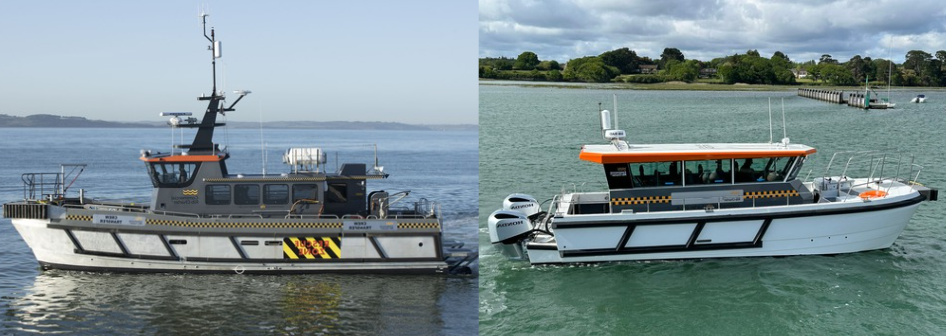
Here at CRC, we have the ideal nitrox dive platform with CRC Sentinel, our 20 meter catamaran featuring a 4-point anchoring system and virtually all dive equipment included as standard. Our gas storage quad features SIXTEEN 50L 200 bar cylinders, eight of which are purely used for nitrox diving. The entire dive spread is designed and maintained according to strict IMCA guidelines (DO23), making Sentinel a truly unique dive vessel ideal for offshore projects in the UK and Europe. Other features include:
- 4-point anchor spread with high holding power anchors
- High pressure compressor built in for breathing air
- Ability to decant shore-side nitrox into gas cylinders
- High quality AxSub recording and black box units
- 125m umbilicals with LEDs and HD cameras included
- MCA Category 2 coding with seating for 12 passengers
- Cruising speed of 20kts, powered by twin MAN V12 inboard diesels and Rolls Royce waterjets.
Read more about our full dive support capabilities and track record here and how our wider fleet of crew transfer and safety boat Cabin Ribs can support many types of projects – www.commercialribcharter.co.uk.