

The marine industry loves an acronym. IMCA, MCA, ISO, CMID, SMS, PMS – the list goes on.
For clients, it can sometimes feel like another layer of paperwork before a project can get moving. But for Commercial Rib Charter, these standards and systems are not just there to tick a box. They help show that our vessels, crews, maintenance, safety procedures and project support are ready for the environments we work in.
From offshore wind and cable landing support, to crew transfers, dive support, survey work, patrol duties and civil engineering projects, our clients need to know that the boats they’re using are suitable, properly managed and backed by the right documentation.
So, what do IMCA, MCA and ISO actually mean for CRC?
IMCA: supporting offshore and marine project standards
IMCA stands for the International Marine Contractors Association. It’s a recognised trade association for the offshore, marine and underwater engineering industries.
For CRC, IMCA is particularly relevant because many of our vessels are used on offshore energy, subsea, cable, diving and marine construction projects. These are sectors where clients quite rightly expect a high level of vessel assurance before anything arrives on site.
Commercial Rib Charter Ltd is a registered vessel operator within the IMCA Common Marine Inspection Document system, better known as CMID. CRC vessels have been surveyed within this system, helping clients review vessel suitability before a project starts.
In practical terms, this means less uncertainty and fewer delays. When a client needs a crew transfer vessel, guard boat, dive support vessel or cable landing support boat, they can quickly access the information they need on vessel condition, equipment, documentation and operational readiness.
It also helps CRC work smoothly with larger marine contractors, offshore energy clients and project teams who already use IMCA and CMID processes as part of their own procurement and safety systems.
MCA: commercial vessel coding and operational limits
MCA stands for the Maritime and Coastguard Agency. In the UK, the MCA is responsible for maritime safety and regulation, including the codes of practice that apply to small commercial vessels.
For CRC, MCA coding is one of the key foundations of safe commercial operation. It confirms where a vessel can operate, what equipment it must carry, how it is inspected, and the standard it must meet before being used commercially.
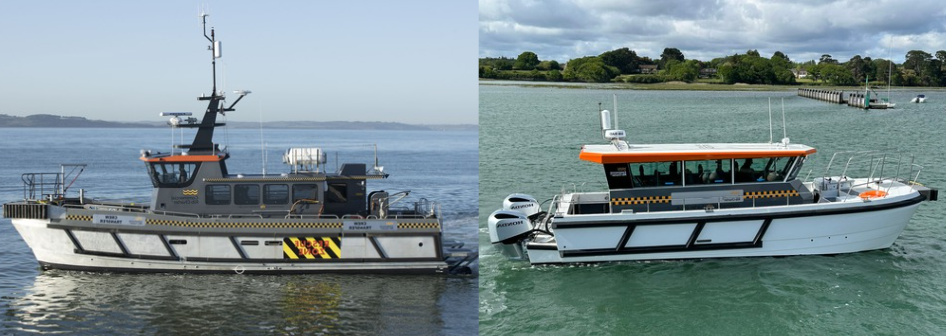
Many of our cabin Ribs and catamarans are coded to MCA Category 2, allowing them to operate up to 60 nautical miles from a safe haven, day and night. This is important for clients working offshore, around wind farms, on cable projects, or in exposed coastal areas where a vessel needs to be capable, compliant and properly equipped.
MCA coding is not just about distance from shore. It also covers areas such as lifesaving equipment, fire safety, navigation equipment, communications, stability, man overboard recovery, servicing and inspection requirements.
For clients, this provides reassurance that the vessel has not simply been chosen because it looks suitable. It has been assessed, equipped and maintained for commercial use.
ISO: consistent management behind the scenes
ISO is the International Organization for Standardization. ISO standards provide recognised frameworks for how businesses manage important parts of their operation.
Commercial Rib Charter is ISO 9001:2015 certified, which focuses on quality management. In plain English, that means having systems in place to deliver work consistently, manage records, review processes, deal with issues properly and keep improving.
In our industry, that matters because successful marine projects rely on more than just the vessel itself.
Clients need accurate documentation. They need crew details, certificates, insurance information, maintenance records, risk assessments, method statements, project communication and reliable mobilisation planning. They need to know that when a vessel is booked, it will arrive ready to work.
ISO 9001 supports that by giving structure to how CRC manages quality across the business. It sits alongside our Safety Management System and Planned Maintenance System, helping ensure that the operational side of the company is backed up by clear internal processes.
What this means on a real project
The value of IMCA, MCA and ISO is clearest when a project is under pressure.
IMCA helps demonstrate vessel assurance for marine and offshore projects.
MCA coding confirms commercial vessel standards and operational limits.
ISO 9001 supports consistent quality management across the business.
A client may need a vessel mobilised quickly for a cable landing. A wind farm support project may require evidence of vessel coding, inspection status and onboard safety equipment before access is approved. A dive support job may need confirmation of vessel suitability, crew competence and supporting documentation. A construction contractor may need paperwork reviewed before a boat is allowed onto a site or into a port.
In each case, the standards and systems behind CRC help make that process smoother and that is why compliance matters. Not because it looks good on a checklist, but because it helps turn a vessel booking into a properly supported marine service, with the equipment, people and processes in place to do the job properly.