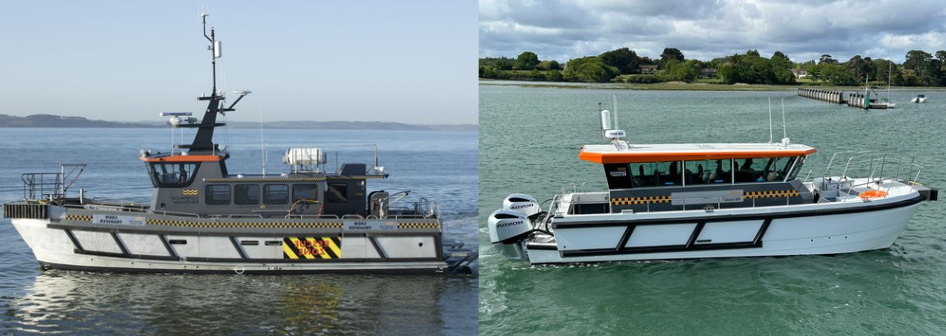

In commercial marine operations, a vessel is only as capable as the crew running it. Whether you’re mobilising a crew transfer vessel (CTV) or supporting a wider commercial charter, competence management isn’t a box-ticking exercise it’s the difference between a project that runs smoothly and one that grinds to a halt over a missing certificate or an under-qualified crew member on the wrong day.
At Commercial Rib Charter, competence management sits at the core of how we plan, crew, and deliver every project. Here’s how we think about it and why it matters more than ever as our commercial marine projects scale up.
Why crew competence is a project risk, not just an HR task
It’s easy to file competence management under “admin.” In practice, it’s a live operational risk. A vessel turned away from a project because a crew member’s STCW certification has lapsed isn’t a paperwork problem it’s a missed transfer window, a delayed start, and a client asking tough questions.
Competence gaps tend to surface at the worst possible moment: during mobilisation, mid-charter, or when a client’s site access team runs a spot check. Managing competence proactively, rather than reactively, is what keeps our projects and reputation on track.
What “Competence” actually covers

For commercial marine crew, competence isn’t a single certificate. It’s a layered set of requirements that typically includes:
- Statutory qualifications — STCW basic safety training, medical fitness certificates, and role-specific tickets (Master, Engineer, Deckhand endorsements)
- Sector-specific training — Working at Heights, sea survival, navigation, and site-specific inductions
- Vessel-specific familiarisation — knowing the systems, emergency procedures, and quirks of the specific vessel a crew member is assigned to
- Ongoing currency — many certificates carry expiry dates (commonly 2–5 years), and a “competent” crew member today may not be compliant next month without renewal
Missing any one of these can mean a crew member isn’t legally or contractually able to work a given charter regardless of how experienced they are.
Building a system, not relying on memory
The businesses that manage this well don’t rely on someone remembering who’s due for renewal. They build a system. For us, that means:
Centralised records. Every crew member’s certifications, expiry dates, and training history live in one place, visible to the people planning crew rotations not scattered across email threads and spreadsheets.
Forward visibility. Rather than discovering a lapsed certificate the week of mobilisation, we track renewals well in advance, giving crew time to book courses and giving planners time to adjust rotas if needed.
Client and site-specific requirements mapped separately. Different clients often have their own onboarding and competence requirements on top of statutory minimums. These need to be tracked project-by-project, not assumed to be identical across charters.
Clear ownership. Competence management works when one person or team owns the process end-to-end chasing renewals, verifying documents, and flagging gaps rather than being everyone’s part-time responsibility (and therefore no one’s).
Where digital tools are changing the game
Manual tracking spreadsheets, folders of scanned certificates, memory can work at small scale, but it strains fast as fleets and crew pools grow. That’s why more operators, us included, are moving toward digital portals that centralise crew documentation, send automated renewal reminders, and give office and operations teams real-time visibility into who’s qualified for what, on which vessel, on any given day.
The goal isn’t complexity for its own sake. It’s removing the guesswork, so competence checks happen well before a crew member steps aboard and not at the gangway.