

Spend five minutes on any Rib charter job and you’ll hear these two questions before anything else gets discussed: inboard or outboard, and petrol or diesel? They might sound like technical small print, but they quietly shape everything – day rate, operating limits offshore, turnaround time, even how the fuel gets to site in the first place. Here’s our take on it, from the CRC fleet’s perspective.
Inboard vs Outboard: It’s all about the job
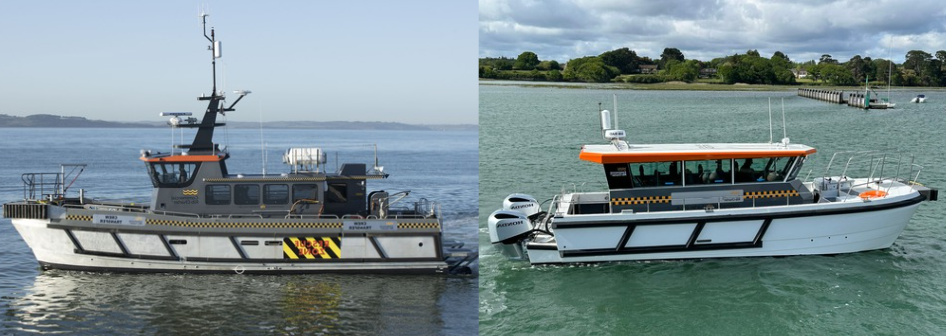
Outboard-powered Ribs dominate crew transfer and light workboat work, and there are good reasons why:
- Shallow draft and manoeuvrability – Trim the engine up and you’re into beach landings, shallow estuary work, and tight alongside manoeuvres near turbines or platforms without a second thought.
- Serviceability – Being able to swap or service an outboard dockside in hours, not days, is a genuine advantage when you’re mid-rotation on an offshore wind job and simply can’t afford downtime.
- Weight and speed – A lighter installation means a better power-to-weight ratio, which means faster transits. No small thing when you’re covering distance to a windfarm or survey site.
- Built-in redundancy – Twin or triple outboard setups give engine redundancy without the complexity of a full inboard driveline. This matters a great deal when it comes to coding and safety case compliance on commercial transfers.
Inboard-powered Ribs earn their keep on a different type of job:
- Rough water performance – Weight sits lower and more central in the hull, which generally means a more settled ride in a seaway. This is useful on longer offshore transits or when the sea state picks up.
- Protected propulsion – Running gear tucked under the hull means far less exposure to debris, rope, and impact damage. This is a real benefit around moorings, fish farms, or ports with floating hazards.
- Payload and towing – Diesel inboard installations often deliver higher continuous power output, suited to towing, salvage-adjacent work, or vessels carrying heavier survey and dive kit.
The honest answer: most of CRC’s crew transfer and offshore wind work favours outboards for their speed and serviceability, while inboard diesel setups still earn their place on sustained rough-water transits and specialist tasks.
Petrol vs Diesel: It’s not as simple as it sounds
This is where it gets properly operational because fuel type isn’t just about running costs, it’s about compliance, storage, and logistics.
Petrol outboards give you lighter engines, better power-to-weight, and typically lower purchase and maintenance costs. The catch: petrol is classed as a highly flammable liquid, which brings stricter rules around storage, bunkering, and transport. ADR exemptions, gas-free certification for tanks, and careful handling around ignition sources all come into play. It also has a shorter safe shelf life if it sits unused, which matters for vessels that aren’t in constant rotation.
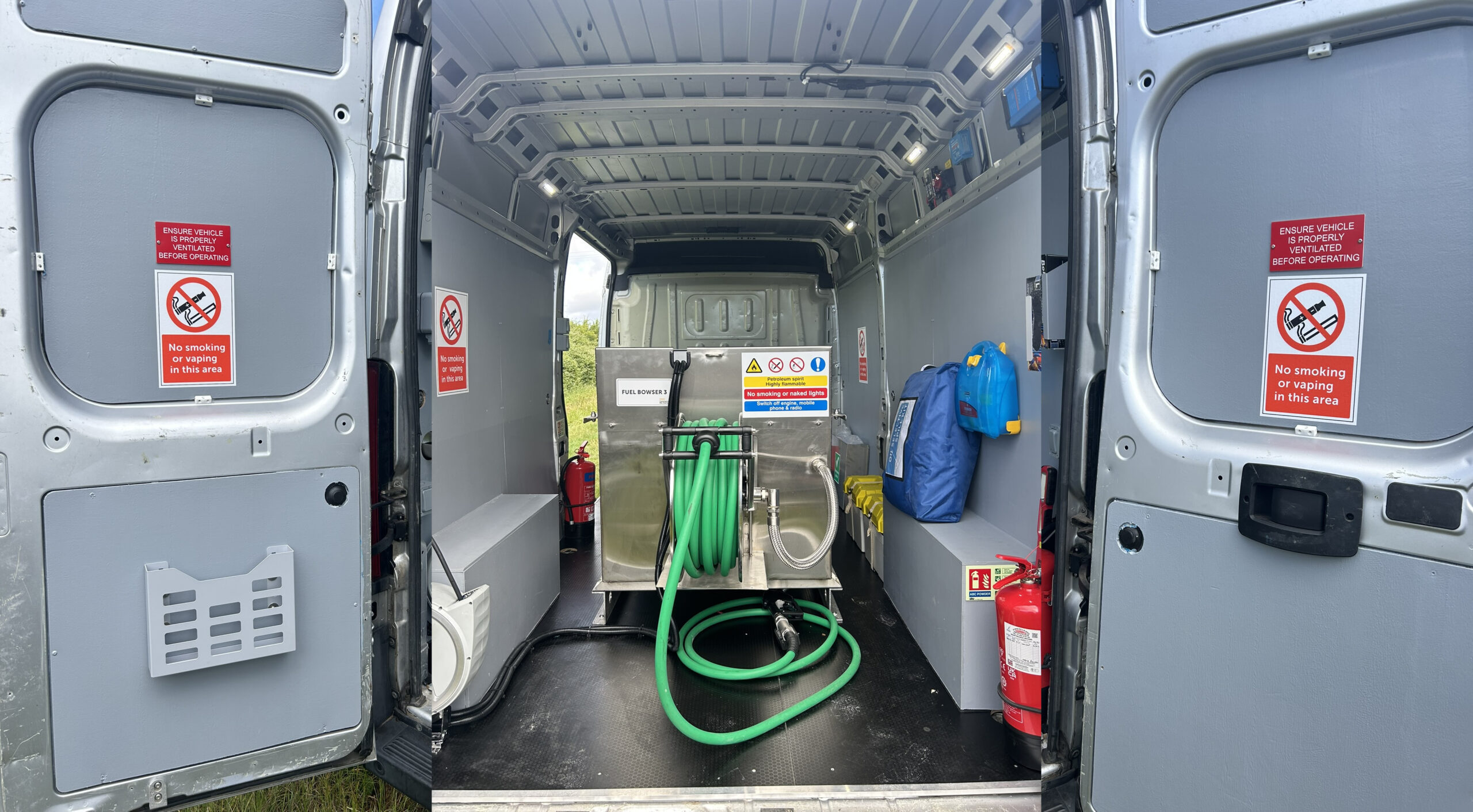
Something else that catches operators out: petrol isn’t always easy to come by once you’re mobilising across Europe. Availability and supply can be patchy depending on where a job takes you which is exactly why CRC runs our own fuel bowser. It means we’re not left hunting for a local supplier mid-mobilisation; we bring our own fuel security with us, wherever the job is.
Diesel inboards (and increasingly some outboards) deliver better fuel economy over long transits and typically longer engine life under sustained load. Diesel’s higher flash point makes it inherently less volatile to store and transport too. This is a meaningful factor when you’re moving bulk fuel or a bowser across borders and need the customs and dangerous goods paperwork to line up. The trade-off is a heavier per-unit installation, which can eat into payload on a smaller Rib.
Why this actually matters for charter planning
When CRC scopes a job, the inboard/outboard and petrol/diesel decision is never a box ticking exercise – It drives:
- Operational range and station-keeping for offshore wind and survey support work
- Crew transfer speed and weather workability limits
- Fuel logistics, especially on multi-leg or cross-border mobilisations where bulk fuel movement and documentation come into play
- Maintenance turnaround, and therefore vessel availability, during tight charter windows
There’s no single “right” answer here. The best combination depends on the job profile, distance offshore, sea state exposure, turnaround requirements, and how the vessel needs to be re-fueled.
The CRC approach
Every vessel in the CRC fleet is matched to the task, not fitted to a one-size-fits-all spec. Whether it’s a fast outboard Rib doing turbine transfers or a diesel inboard workboat holding station in a bigger swell, propulsion and fuel choice are part of the operational planning from day one – never an afterthought.
And while petrol and diesel remain the backbone of commercial Rib operations today, we’re keeping a close eye on developments in electric propulsion. It’s early days for the demands of offshore work, but it’s very much part of how we’re thinking about the fleet’s future.